
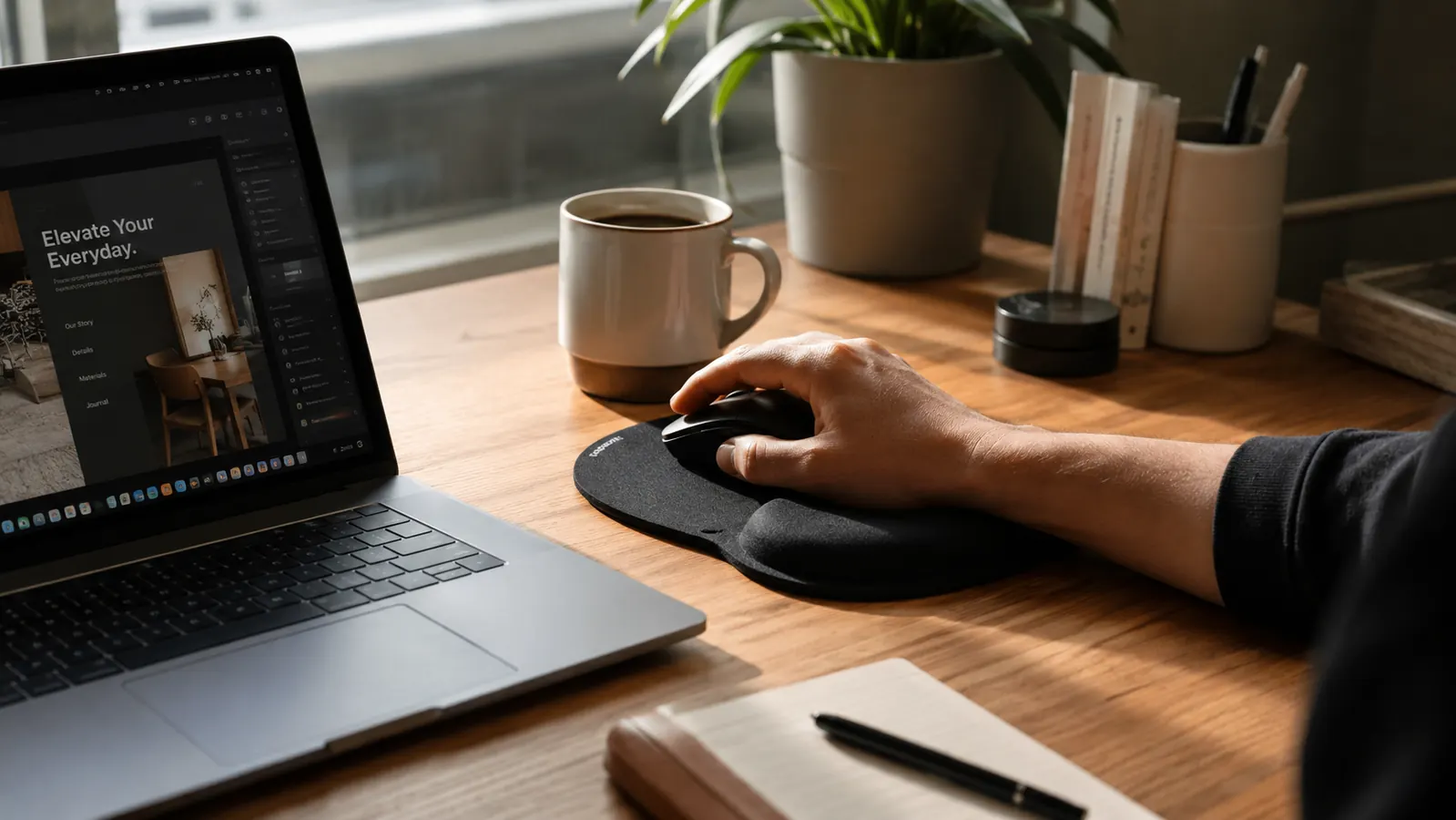
Six months into working remotely full time, I developed a nagging ache in my right wrist. Not sharp pain, just a dull clicking discomfort every time I reached across my desk to use the mouse. My setup was fine by most measures: a decent chair, an external keyboard, a monitor at eye level. But I was mousing on bare wood with nothing under my wrist, and it was catching up with me. A colleague on a Slack call mentioned the MROCO Ergonomic Mouse Pad with Gel Wrist Rest almost as a throwaway comment. She said she had bought it for under ten dollars and that her wrist pain had simply stopped. I filed it away and kept ignoring mine for another two weeks.
Eventually I ordered it. Not because I was convinced it would work, but because the price of trying was so low that I had no good reason not to. The MROCO pad showed up two days later in a flat poly envelope. I set it on my desk, positioned the gel ridge under my wrist, and went back to work.
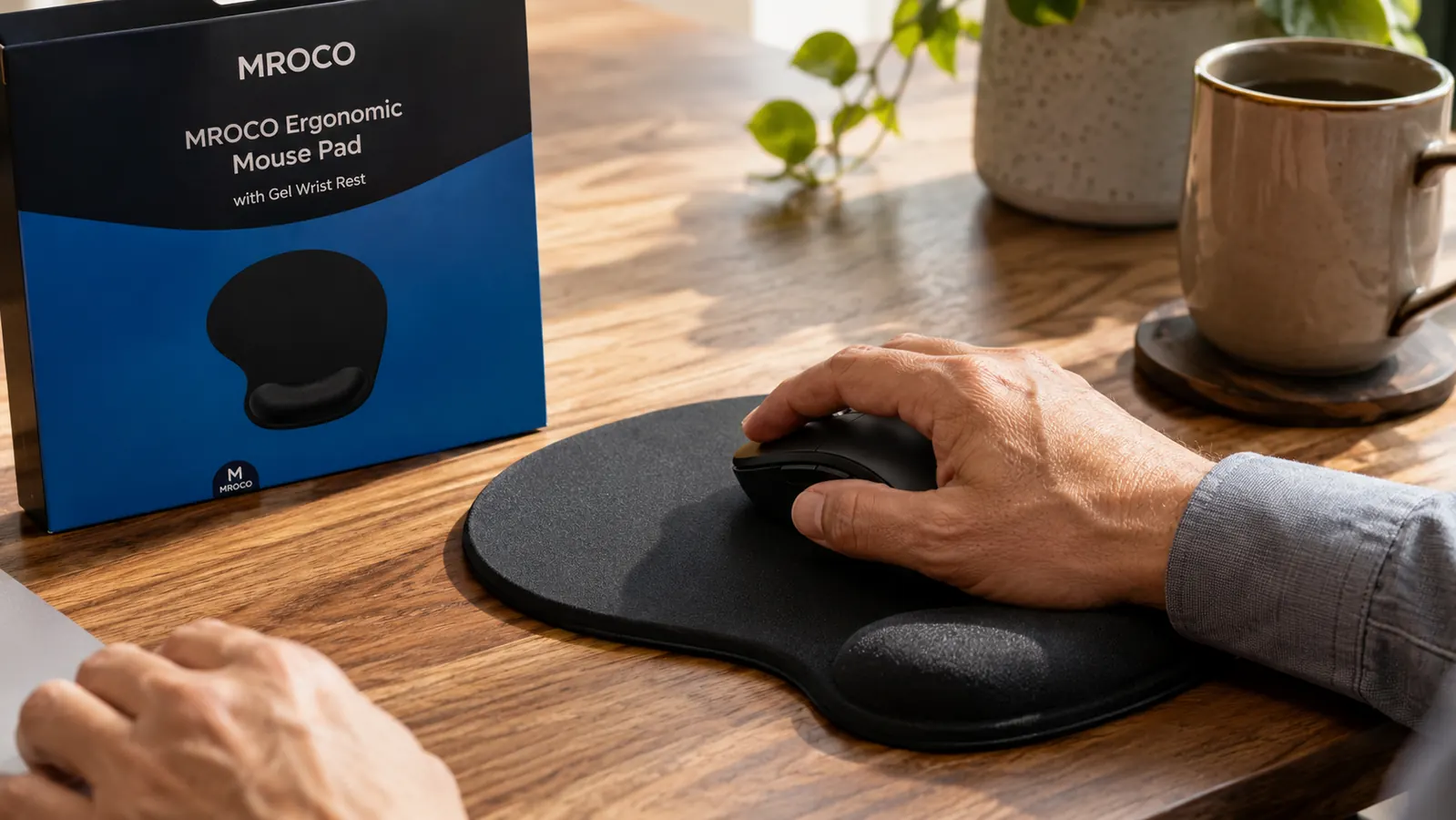
The first thing I noticed was that my wrist was no longer pressing against hard wood every time I stopped scrolling. The gel cushion is firm, not squishy like a stress ball. It holds its shape under weight without bottoming out. My wrist sat at a slightly more neutral angle than it had on the bare desk surface, and within the first hour I realized I was repositioning my arm less often than usual.
My wrist was no longer pressing against hard wood every time I stopped scrolling. Within the first hour I realized I was repositioning my arm less often than usual.
By the end of the first week the clicking discomfort had dropped noticeably. Not gone completely, but quieter. By the end of week three it was background noise. By the end of the second month I had genuinely forgotten I ever had the problem.
I want to be fair about what the MROCO pad is and what it is not. The tracking surface is a standard foam-backed fabric pad with a stitched edge, 9.4 by 8.1 inches. It does not have any exotic nano-weave coating or special glide treatment. My mouse tracks on it fine, including at higher DPI settings. The gel wrist rest is the one thing that earns its keep. It sits attached to the bottom edge of the pad, slightly raised, and it does not separate or peel after months of daily use. The rubber base grips my desk without slipping, which matters more than people realize. A pad that slides every time you reach for it stops being useful very quickly.
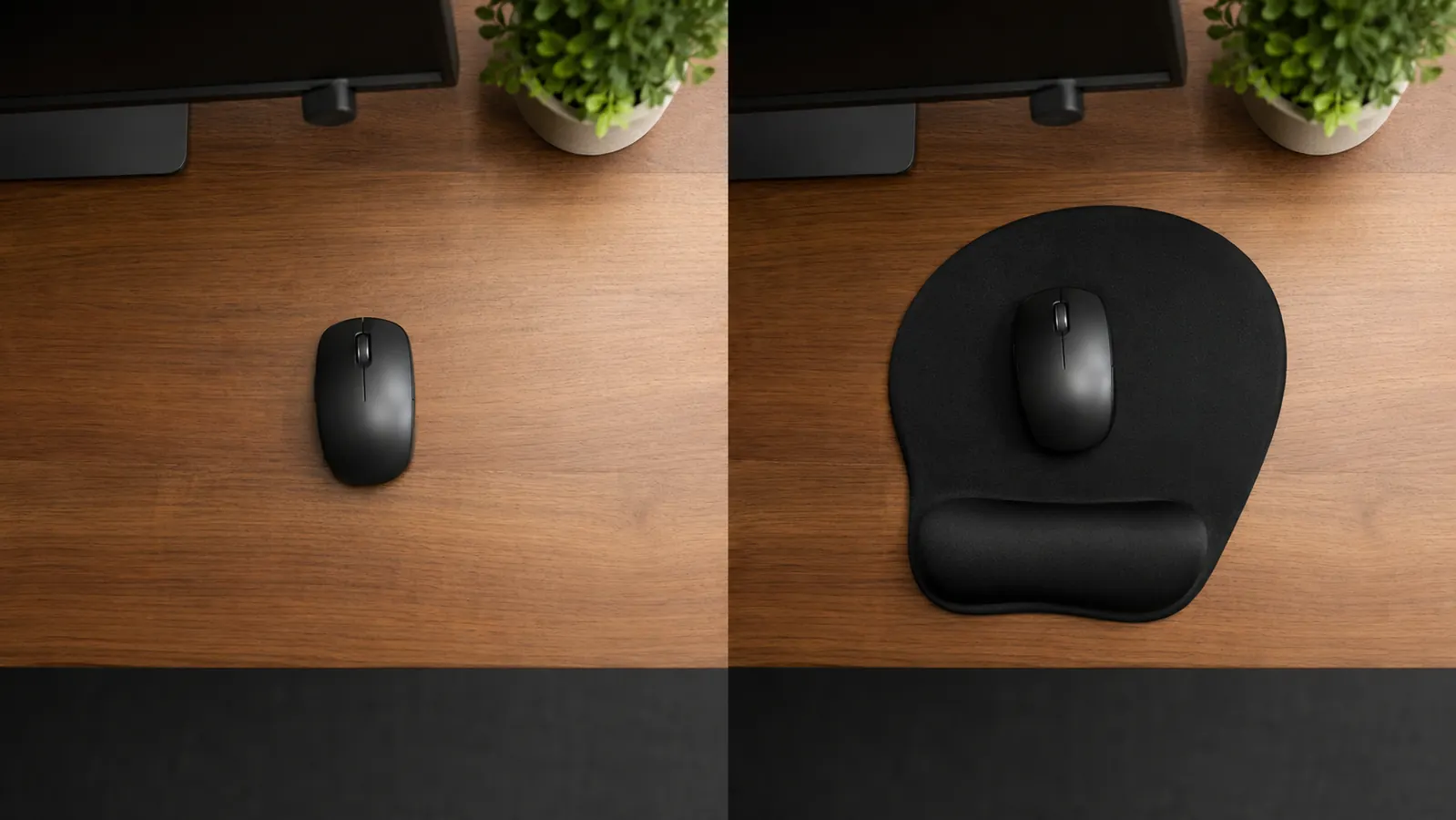
What the pad will not fix is a fundamentally wrong mouse position. If your monitor is too far away and you are reaching forward to click, a wrist cushion is treating a symptom rather than the cause. I adjusted my monitor position and chair height at the same time I added the pad, so I cannot take the full credit for the fix. But the pad was part of it, and at the current price it is the part that costs the least to test first.
Your wrist has been hurting long enough. Check today's price on the MROCO gel wrist rest mouse pad before you click through another hour without it.
Over 34,000 buyers have left reviews on this pad, and it holds a 4.6-star rating. At today's price, it is the lowest-friction ergonomics upgrade you can make this week.
Amazon Check Today's Price on Amazon →One honest note: the gel cushion is slightly taller than a flat pad, which means your wrist sits a fraction of an inch higher than your fingers while you mouse. For most people this is fine and actually closer to the neutral wrist position physical therapists recommend. A small number of reviewers find it uncomfortable if they have already adapted to flat mousing for years. If that sounds like you, it is worth trying it for a week before you decide it is not working. The adjustment period is real but short.
My copy is now over eight months old. The fabric is clean, the gel has not hardened or cracked, and the rubber base still grips the desk on the first placement every morning. I have had more expensive mouse pads that did not last as long.
What I'd Tell You If We Were Sitting at My Kitchen Table

Here is the straight version. If your wrist bothers you at the end of a mouse-heavy workday, the MROCO gel wrist rest pad is the first thing I would try. Not a brace. Not a standing desk converter. Not an expensive ergonomic mouse. The pad, because it costs almost nothing and because it targets the specific thing that causes repetitive strain at the mouse: your wrist pressing against a hard edge at a bent angle for six or eight hours at a stretch.
If you try it for two weeks and your wrist still hurts the same amount, then you have a different problem and you should talk to a doctor or a physical therapist. But in my experience, and in the experience of a lot of remote workers I have talked to, the fix is often this simple. You just have to be willing to spend ten dollars to find out. I wish I had spent those ten dollars in month one instead of month seven.
If you want to go deeper on the ergonomics side before you buy, I have a full three-month review at MROCO Ergonomic Mouse Pad Review: Three Months of Daily Use on a Sore Wrist. And if you want a broader framework for preventing wrist strain across your whole desk setup, start with How to Prevent Wrist Strain When Working from Home.
Ready to stop reaching for your wrist at the end of the day? The MROCO gel wrist rest pad is where I would start.
Backed by 34,000 ratings and a 4.6-star average. At today's price, this is the home office ergonomics upgrade that earns its desk space on day one.
Amazon Check Today's Price on Amazon →